
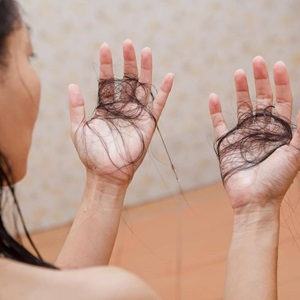
Telogen Effluvium - Understanding Sudden Shedding
Telogen Effluvium is one of the most common causes of sudden, noticeable hair shedding. While it can be alarming to see increased hair loss when washing or brushing, the good news is that Telogen Effluvium is usually temporary and reversible when properly diagnosed and managed.
It can affect both men and women, and occur at any age. It is particularly common in individuals who have experienced physical, emotional or hormonal stress. Women often notice it following hormonal changes, while men may experience it after illness, stress or significant lifestyle changes.
At Stephen James Trichology, with clinics in Banbury, Birmingham and Saffron Walden, we specialise in identifying the cause of hair loss and creating tailored treatment plans to support healthy regrowth.
Key Takeaways:
✔ Telogen effluvium is when you shed hair across the scalp.
✔ It is common in individuals who have experienced physical, emotional or hormonal stress.
✔ Get help with a consultation and likely diagnosis at Stephen James Trichology.
✔ Our hair loss clinics are in Banbury, Birmingham and Saffron Walden.
What Is Telogen Effluvium?
Telogen Effluvium is a type of non-scarring hair loss that occurs when a higher-than-normal number of hair follicles enter the telogen (resting) phase of the hair growth cycle at the same time.
Normally, around 10–15% of your hair is in the telogen phase. With Telogen Effluvium, this can rise significantly, leading to excessive shedding, often noticed two to three months after a triggering event.
Unlike pattern hair loss, Telogen Effluvium causes diffuse thinning across the scalp, rather than receding hairlines or thinning at the crown.
What Causes Telogen Effluvium?
Telogen Effluvium is triggered when the body redirects energy away from hair growth in response to stress or imbalance. Common triggers include:
- Physical or emotional stress
- Illness, infection or high fever
- Surgery or trauma
- Hormonal changes (including post-pregnancy or menopause)
- Sudden weight loss or restrictive dieting
- Nutritional deficiencies (such as iron, vitamin D or B vitamins)
- Certain medications
- Thyroid imbalance
In some cases, multiple factors may be involved, which is why professional assessment is essential.
How Long Does Telogen Effluvium Last?
Hair shedding typically begins 2–3 months after the triggering event and may continue for several months. In most cases, shedding slows once the underlying cause is addressed, and regrowth begins within 3–6 months.
However, if triggers persist or Telogen Effluvium is left unmanaged, it can become chronic, lasting longer than six months and requiring targeted intervention.
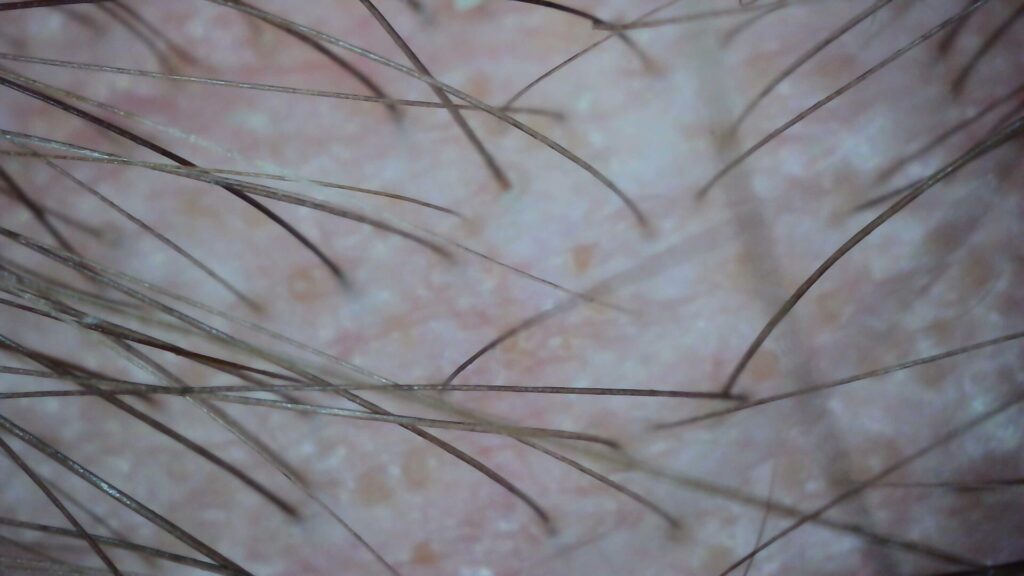
At Stephen James Trichology, treatment always begins with a comprehensive consultation and scalp analysis to identify the root cause of hair shedding.
Why a Professional Consultation Matters
Telogen Effluvium is often mistaken for other types of hair loss, such as Female Pattern Hair Loss or Male Pattern Hair Loss. Misdiagnosis can lead to ineffective treatment and unnecessary anxiety.
A consultation with a qualified trichologist ensures:
- Accurate diagnosis of your hair loss
- Identification of triggering factors
- A personalised, evidence-based treatment plan
- Reassurance and expert guidance throughout recovery.