
What Can You Do To Reverse Traction Alopecia?
Traction Alopecia is a form of hair loss caused by repeated tension or pulling on the hair follicles over time. It often develops gradually and can become permanent if left untreated, making early diagnosis and intervention essential.
In the early stages, the condition is reversible, but prolonged stress on the follicles can lead to scarring and permanent hair loss. Unlike other forms of alopecia, Traction Alopecia is directly linked to hairstyling habits rather than genetics or autoimmune activity.
Our Consultant Trichologists based in Banbury, Birmingham and Saffron Walden provide expert assessment and personalised treatment plans to help prevent further hair loss and support regrowth wherever possible.
Key Takeaways:
✔ Traction alopecia occurs when you put your hair under stress.
✔ Tight ponytails and braided hairstyles can cause traction alopecia.
✔ If caught early, you can reverse hair loss from traction alopecia.
✔ Book a hair loss consultation at clinics in Banbury, Birmingham and Saffron Walden.

Who Does Traction Alopecia Affect?
Traction Alopecia can affect men, women and children of all ages. It is particularly common in individuals who regularly wear hairstyles that place strain on the hair, including:
- Tight ponytails or buns
- Braids, cornrows or dreadlocks
- Heavy hair extensions or weaves
- Tight headwear or helmets
- Repeated use of tight clips or bands
- Heat styling on stressed hair.
The condition is seen more frequently in people who wear these styles long-term or continuously.
Signs and Symptoms of Traction Alopecia
Early signs are often subtle and may include:
- Thinning around the hairline or temples
- Receding edges or broken hairs
- Tenderness, redness or itching of the scalp
- Small bumps or inflammation around hair follicles.
As the condition progresses, hair may stop regrowing in affected areas.
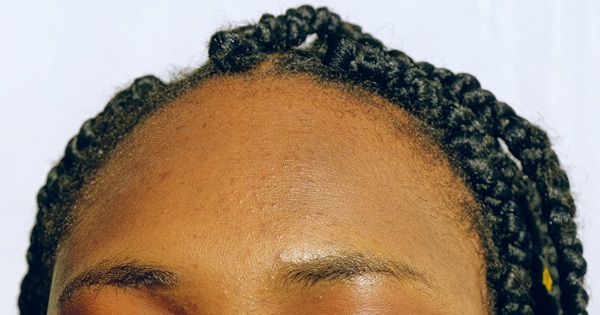
Can Traction Alopecia Be Reversed?
In its early stages, Traction Alopecia is often reversible with the right changes and treatment. However, if follicle damage becomes permanent, regrowth may not be possible in affected areas.
This is why early consultation with a trichologist is vital if you notice thinning around the hairline or persistent scalp discomfort.
Many people don’t realise their hair loss is being caused by traction until significant thinning has occurred. A professional consultation allows us to:
- Accurately diagnose the condition
- Assess follicle viability
- Identify damaging habits
- Create a tailored, realistic treatment plan.